The way families look for care has changed more in the last few years than it did in the decade before. Decisions take longer. Research runs deeper. And most people form strong opinions long before they ever pick up the phone.
By the time a family reaches out, they’re often already carrying worry, guilt, and a fear of getting it wrong.
As we move towards 2026, care homes and later living communities need a marketing strategy that feels clearer, calmer and far more human than anything that’s come before. Families want reassurance. They want honesty. And they want to feel a sense of connection long before they book a visit.
This is what a strong marketing strategy will look like in 2026 – and what care providers should be preparing for now.
One Strategy. Three Audiences.
A strong marketing strategy speaks to:
- Prospective residents, who want comfort, familiarity and a home that still feels like their own.
- Adult children, often overwhelmed and carrying the weight of responsibility
- Health and social care professionals, who value reliability, communication and trust.
Each audience needs something slightly different – but all need clarity, kindness and reassurance.
A Digital-First Approach, Powered by Humanity
Digital isn’t replacing human connection. It’s often the first step towards it.
Many families now form their first impression of a care home through Google listings, directories, AI-led search summaries, reviews or social media – sometimes before they’ve even seen your website.
That’s why every digital touchpoint matters. Your tone, your photos, your language, your reviews – together they quietly answer the question every family is asking:
“Can I trust this home?”
Warmth, clarity and consistency across all channels help families feel steadier before they ever walk through the door.
Authentic Storytelling Will Lead the Way
In 2026, the homes that stand out won’t be the loudest. They’ll be the most genuine.
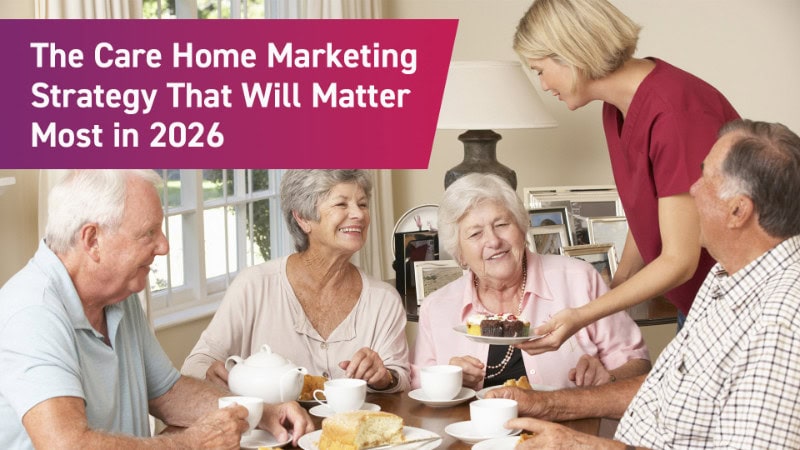
Families aren’t looking for staged photos or polished slogans. They want to understand what life actually feels like inside your home – the atmosphere, the people, the small moments that make a day feel good.
Real stories help them do that. Everyday hobbies. Shared laughs. Staff personalities. Quiet moments of care. Little celebrations that matter deeply to the people involved.
These stories don’t belong in just one place. They show up across your website, in social posts, in newsletters, in press stories, and in the conversations you’re having with families long before a visit is booked.
Each story becomes another gentle reassurance. Another way for someone to think, “I can see Mum here.” Not just living – but belonging.
Video Will Become Essential
Short, simple videos are one of the quickest ways to build reassurance.
A quick hello from the manager. A walk through a lounge. A snapshot of an activity. A moment of calm connection between staff and residents.
For adult children researching late at night, video offers something powerful – a sense of presence without pressure.
You don’t need glossy production or perfect lighting. What matters is that it feels real.
Local and Digital Visibility Will Carry Equal Weight
Local visibility still matters enormously. An accurate Google Business Profile, clear opening hours, up-to-date photos and helpful responses all build confidence.
Alongside that, AI-powered search is becoming part of how families gather information. Increasingly, people are being shown summaries rather than full pages.
To show up well in these spaces, your content needs to be clear, plain-spoken and written the way people actually talk.
Homes that communicate with warmth and ease will be far more visible than those relying on stiff or outdated SEO tactics.
Reputation Will Make or Break Trust
Nothing reassures families like hearing from someone who’s already walked the path they’re on.
Reviews, testimonials and honest feedback play a huge role in decision-making – sometimes more than any brochure or advert ever could.
A strong strategy for 2026 includes regularly gathering feedback, responding with care, sharing positive experiences, and making information like CQC ratings easy to find.
One heartfelt review can change how a family feels in an instant.
PR Will Strengthen Trust and Visibility
PR is no longer an add-on. It’s part of how trust is built over time.
Sharing genuine stories about residents, staff, community involvement, milestones and improvements helps your home become familiar and credible within the local area.
Good PR doesn’t need to be flashy. It simply shows who you are, what you value and how you show up – consistently.
And when challenges arise, homes that already communicate openly are far more likely to be met with understanding.
Social Media Is Where Families Quietly Get to Know You
Social media is often where families watch quietly before they ever make contact.
They’re looking for signs of warmth, kindness and normal day-to-day life. Not constant posting – just honest, regular glimpses that feel reassuring.
Short videos, staff introductions, resident stories (with permission) and small everyday moments all help families feel familiar with your home before they visit.
Data and AI Should Support – (Not Replace) – Your Voice
Data can help you understand where enquiries come from, what families are engaging with and where confidence builds or drops away.
AI can help with organisation, themes and targeting. But it isn’t the storyteller.
Your voice, your values and your care are what make the difference. Technology should simply give your team more space to focus on the human side of communication.
A Consistent Experience, Wherever Families Meet You
Families don’t move in straight lines anymore. They jump between Google, directories, Facebook, Instagram and your website – sometimes all in the same evening.
A strong strategy ensures every touchpoint feels consistent, calm and reassuring. No mixed messages. No dead ends. No confusion.
The aim is simple: make a stressful time feel just a little easier.
The Power of Extra-Special Moments
In 2026, it’s often the smallest gestures that leave the biggest impression.
Thoughtful touches can turn a visit into a moment families remember – and talk about.
Things like reserving a parking space with a visitor’s name on it, offering a small welcome note or gift, remembering who they’re coming to see, or tailoring a tour around what matters to them.
These moments don’t cost much. But they quietly say, “We see you. We care.”
And that feeling stays with families long after they’ve left.
Community Relationships Still Matter
Even in a digital-first world, local trust carries real weight.
Strong relationships with GPs, discharge teams, charities, schools and community groups help reinforce confidence and keep your home part of everyday local life.
Families may find you online – but reassurance is often strengthened through familiarity.
Being Clear About What You’re Known For
Families compare more homes than ever. Clarity helps them choose.
Whether your strength is dementia care, nursing expertise, end-of-life support, meaningful activities, long-standing staff or a truly home-from-home feel – say it clearly and say it with pride.
2026 Will Belong to the Homes That Feel Most Human
Families don’t choose care homes because of clever wording or glossy brochures.
They choose based on how a place makes them feel.
The homes that will thrive in 2026 are the ones that communicate with warmth, share real life, show everyday care, stay visible locally and digitally, and create small, thoughtful moments when families need them most.
Marketing in 2026 isn’t about being louder. It’s about being clearer, kinder and more connected.
If you’d like support shaping a strategy that blends hospitality, marketing expertise and deep care-sector understanding, Commercial Acceleration can help you build a confident, future-ready plan for 2026.